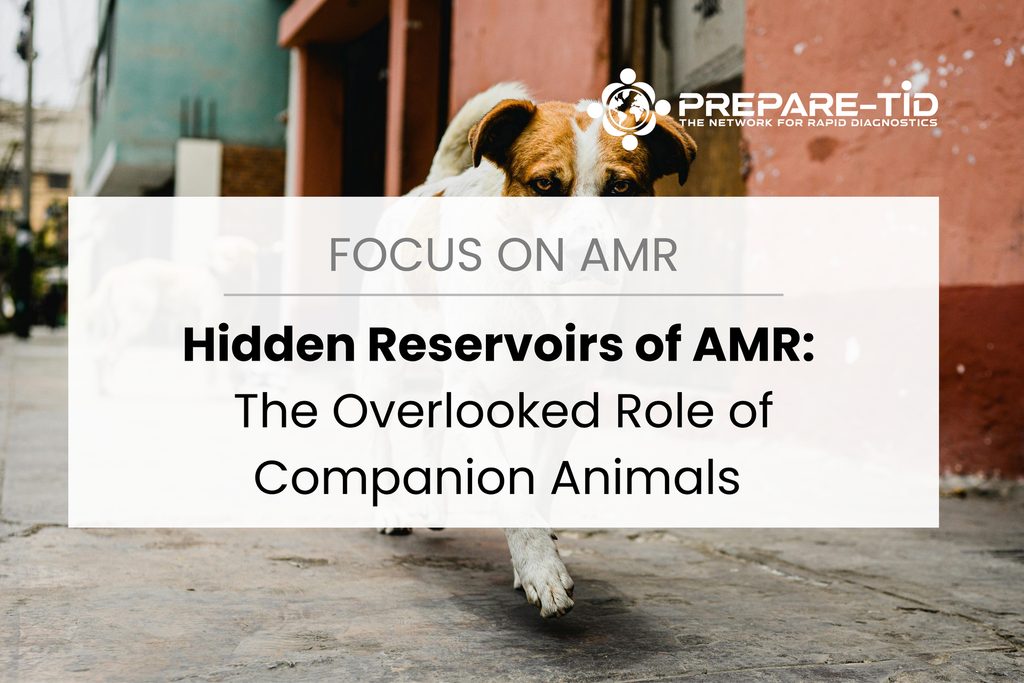
When we talk about antimicrobial resistance (AMR), the mind usually jumps to hospitals, intensive care wards, or industrial farms. Rarely do we picture the wagging tail that greets us at the door. Yet, as Assoc. Prof. Olga Makarova from the University of Veterinary Medicine in Vienna showed in the latest PREPARE-TID webinar, dogs may be carrying more than affection and loyalty, they may be silent carriers of resistant bacteria that spill across species.
A familiar drug, an ancient warning
Penicillin, the archetypal β-lactam antibiotic, was hailed as a miracle when Alexander Fleming discovered it in 1928. But even in his 1945 Nobel lecture, Fleming cautioned that misuse could drive resistance. That prophecy has been realized with brutal efficiency. β-lactams, which include penicillins, cephalosporins, monobactams, and carbapenems, are now among the most widely used antibiotics worldwide. Their very ubiquity has driven resistance, with extended-spectrum β-lactamases (ESBLs) emerging as one of the most formidable threats.
ESBLs are enzymes capable of dismantling most β-lactams, including third-generation cephalosporins, while leaving only carbapenems effective in many cases. They are encoded by mobile genes such as blaCTX-M, blaTEM, and blaSHV, which move easily between bacteria. The result is not just resistance to a single drug, but often multidrug resistance, as these plasmids carry whole cassettes of resistance traits.
European surveillance has tracked rising prevalence in hospitals and food-producing animals, with hotspots in southern and eastern regions reporting up to 25–50% ESBL carriage in clinical isolates. But one group remains largely absent from these datasets: companion animals.
Why pets matter
Austria is home to roughly 837,000 dogs, including about 55,000 in Vienna. Unlike livestock, these animals share couches, bedrooms, and dining spaces with their owners. They interact daily with children, the elderly, other pets, and the city environment. If dogs carry resistant bacteria, the potential for exchange with humans is intimate and continuous.
Yet, the last Austrian study of ESBL-producing bacteria in dogs was over a decade ago, in rural Tyrol, reporting a prevalence of just 2.2%. Urban Vienna presented a different question: had the situation changed?
A closer look in Vienna
Prof. Makarova and her colleagues sampled 88 dogs visiting the University of Veterinary Medicine Vienna clinic in Vienna. These were not hand-picked “problem cases”: some came for routine vaccinations, others for treatment. The clinic does, however, specialize in gastrointestinal disorders, meaning nearly half of the dogs (49/88) suffered from inflammatory bowel conditions. About one-third (29/88) had been prescribed β-lactam antibiotics within the past six months.
Using selective agar, disk diffusion, and whole-genome sequencing, the team sought to answer a deceptively simple question: how many of these animals carried ESBL-producing Escherichia coli?
A striking answer
The prevalence was 14.8% (13/88 dogs), far higher than the European average (6.2%) and vastly above Austria’s last reported figure from Tyrol (2.2%). All isolates were E. coli, most carrying blaCTX-M-1, blaCTX-M-15, or blaTEM-1B.
Resistance was not confined to β-lactams:
- Nearly 31% of isolates were phenotypically multidrug resistant.
- Over 53% carried genotypic MDR signatures.
- Almost half were resistant to ciprofloxacin, while 38.5% resisted trimethoprim-sulfamethoxazole and tetracycline.
The good news: no carbapenem resistance was detected. As prof. Makarova noted, carbapenems are strictly reserved for human medicine in Europe and forbidden in veterinary practice. Austria’s stewardship in this regard appears to be working, for now.
Not just any E. coli: high-risk clones
Genomic analysis revealed an even more unsettling dimension. Several of the isolates belonged to high-risk pandemic human lineages of E. coli:
- ST141, an emerging ExPEC (extra-intestinal pathogenic E. coli) clone, was found in a with irritable bowel syndrome. This isolate carried 102 virulence genes, including exotoxins such as hemolysin, colibactin, and cytotoxic necrotizing factor 1, traits associated with aggressive urinary tract infections in humans. Genetically, it clustered with human clinical isolates from France and Poland.
- ST38, another high-risk ExPEC clone, was isolated from a dog suffering from acute hemorrhagic diarrhea that progressed to bacteremia. It was resistant to both β-lactams and quinolones and phylogenetically close to U.S. human isolates. Intriguingly, it nested among poultry and bird isolates from Northern Europe, suggesting that avian vectors may help spread this lineage.
- ST131, perhaps the most infamous pandemic E. coli lineage, was carried by a dog with necrotizing hepatitis. Resistant to β-lactams and quinolones, its genome clustered with pet isolates from France and a human isolate from Denmark, but was genetically distinct enough to suggest a degree of specialization in pets.
Even isolates not belonging to these lineages carried virulence factors that would make any clinician uneasy. Across all 13, the researchers detected 164 virulence-associated genes, spanning adhesion, iron acquisition, effector delivery, and stress survival. Hemolysis assays confirmed that ST131 and ST141 produced toxins capable of lysing host red blood cells.
Curli and cellulose assays revealed further adaptations: 9 of 13 isolates produced curli fibers at 37 °C, and 5 produced cellulose, traits that enhance bacterial persistence both in hosts and on environmental surfaces.
Beyond the data: the nuances of interpretation
The Q&A session highlighted the care needed when interpreting these findings.
- Carbapenems: The absence of carbapenem resistance is less a triumph of biology than a reflection of strict policy: these drugs are simply not used in animals. Yet human-to-dog spillover remains possible, even if rare in Austria’s low-prevalence human population.
- Transmission mechanisms: The team did not yet dissect whether ESBL genes were primarily spread via plasmids or transposons. That analysis, Prof. Makarova noted, remains a priority for future work.
- Other species: Cats generally show lower prevalence than dogs, likely due to more indoor lifestyles. Horses, in contrast, may show rapid colonization when hospitalized and treated with antibiotics, with prevalence rates spiking to 50%.
- Representativeness: The study sequenced one isolate per morphology type, limiting quantitative inference. Prof. Makarova herself acknowledged that only metagenomics could capture the full resistome landscape. Still, this baseline provides an indispensable reference point.
What this means for One Health
The conclusion is both sobering and urgent. Dogs in Vienna are carrying ESBL-producing E. coli at levels that rival major European cities. Some isolates belong to lineages that are both pandemic and virulent, demonstrating that resistance and pathogenicity can converge within the same genomes.
The evidence points to dogs as lilely spillover hosts, acquiring human-associated resistant bacteria. Yet their role as conduits should not be underestimated. Through licking, cuddling, and simple cohabitation, pets may serve as vectors of AMR in ways more intimate than any farm animal or hospital surface.
This study underscores a surveillance blind spot. Companion animals remain largely absent from European AMR monitoring, which prioritizes hospitals and livestock. But with millions of pets living in daily contact with humans, ignoring this reservoir risks underestimating transmission pathways.
As Prof. Makarova concluded: “We should not underestimate the transmission risk in the One Health context.”
The wag of a tail may not seem like an epidemiological threat. But in the genomes of the bacteria carried by our dogs, we glimpse a warning: resistance is not confined to clinics or barns. It is sitting beside us on the sofa, waiting for a chance to move.
Take your AMR diagnostics further
Accurate DNA extraction is the foundation of any resistance study. Whether you’re screening companion animals, environmental samples, or wastewater, our SwiftX™ DNA and SwiftX™ DNA Water Kits streamline lysis and purification, without inhibitory carryover.