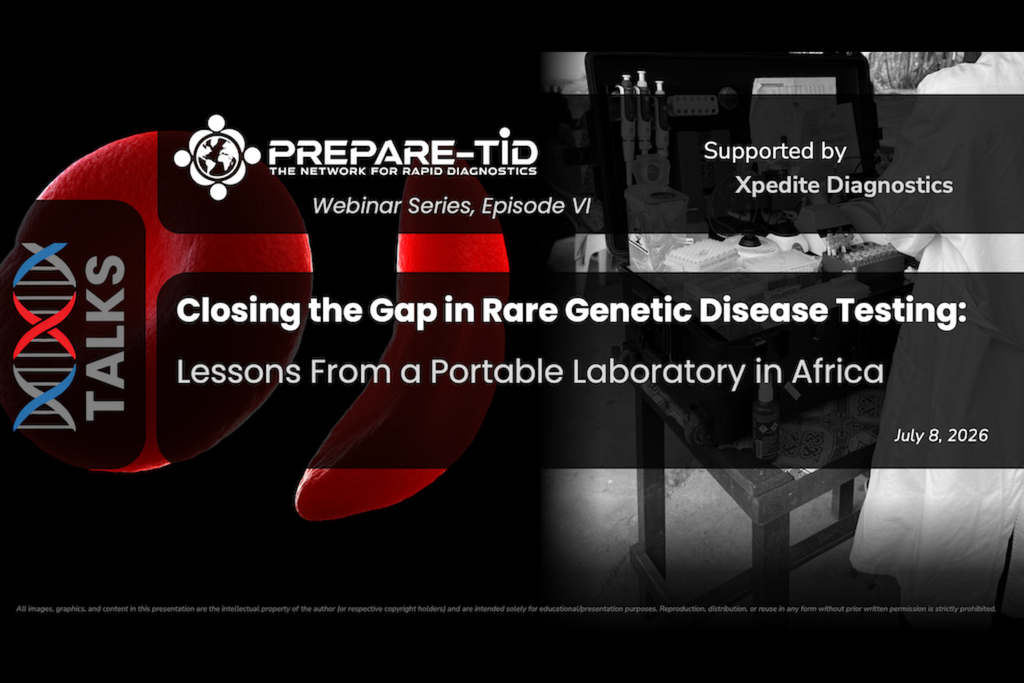
Xpedite Diagnostics brought together Prof. Hugues Abriel of the University of Bern and its in-house R&D team for a practical, methods-focused exchange on decentralized genetic testing, highlighting how portable molecular workflows can bring HBB genotyping closer to the communities most affected by sickle cell disease. The disease affects an estimated 7.7 million people worldwide, with the highest burden concentrated in western and central Africa, yet routine genotyping rarely reaches the patient.
Taking Genetic Testing to the People Who Need It
Prof. Hugues Abriel opened the session with the experience of deploying a portable molecular laboratory at the annual meeting of the Swiss sickle cell patient association. Carried out in direct support of people living with the disease, the PORTA-HBB day demonstrated that a genetics laboratory can operate in a non-clinical setting and return same-day, interpretable results. Abriel also outlined the road ahead: extending the same approach with partners in sub-Saharan Africa, and the ethical, logistical, and community considerations that shape a successful field deployment.
From Tissue to DNA: Sample Preparation Without a Lab
Dr. Johannes Graf addressed one of the most demanding and under-discussed links in the chain: reliably preparing nucleic acids from real-world tissue, blood, and buccal samples in the absence of conventional laboratory infrastructure. Drawing on Xpedite's extraction technologies, he showed how robust, infrastructure-light sample preparation underpins dependable genotyping in decentralized settings, and where the current limits still lie.
A Methods-First, Community-Grounded Approach
The session was built around open exchange, what has worked, the limitations encountered, and the questions still being addressed, so that others engaged in or considering similar work can build on this experience. As the speakers emphasized, closing the diagnostic gap is not solely a technology question; it requires working alongside patient communities, clinicians, and local partners to develop approaches that genuinely fit the settings where they are needed.
As Episode 6 highlighted, portable molecular genetics now offers a realistic path to timely, patient-proximate testing, bringing molecular diagnostics closer to where they are needed most.
- Watch the full webinar recording [here]
- Explore collaboration opportunities [contact us]
- Follow Xpedite Diagnostics on LinkedIn or subscribe to our newsletter for updates on upcoming events and insights