ClassiX™ DNA/RNA
One universal chemistry for every sample type in just a single 30-minute workflow.

A single silica-bead chemistry for simultaneous DNA and RNA recovery, across a wide range of clinical sample types.
It's finally here. Developed from over 20 years of combined sample-preparation experience, ClassiX™ DNA/RNA delivers reproducible nucleic acid yields from 14 validated matrices and across bacterial, viral, fungal, and parasitic targets, including complex, inhibitor-rich matrices where recovery is hardest to achieve.
Register today for the incoming launch webinar (24.09.2026)

14 validated sample types

Bacteria
Viruses
Fungi
Parasites

Validated on clinical samples

Manual & automation ready
REF: CXDR-96
ISO 13485:2016 certified
RUO today; IVD validation underway
DIFFICULT SAMPLES?
Built to perform with the toughest matrices
Most extraction kits are optimized for a narrow set of samples. ClassiX™ DNA/RNA was designed for simple to complex matrixes in the routine laboratory.
Signature capability
Recovery from whole blood and other complex matrices
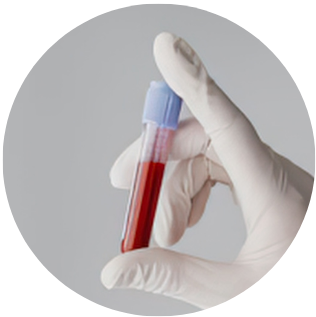
Heme, hemoglobin, and high protein load make whole blood one of the most inhibitory matrices in molecular biology, where many kits lose sensitivity or fail to detect. ClassiX™ DNA/RNA recovers amplifiable DNA and RNA reliably, even in samples that routinely compromise extraction.
Quantifiable signal at a 1/1,000 blood dilution
Inhibitor-rich matrices
Clean DNA and RNA from stool, without inhibition

Stool is among the most inhibitory matrices in molecular diagnostics, dense with bile salts, polysaccharides, and humic acids that carry into the eluate and shut down amplification. ClassiX™ DNA/RNA clears them, delivering PCR-ready DNA and RNA that amplify reliably from the first run.
0 / 32 inhibition events · E. coli O157, EAEC, Shigella recovered
Universal
14 sample types on a single chemistry
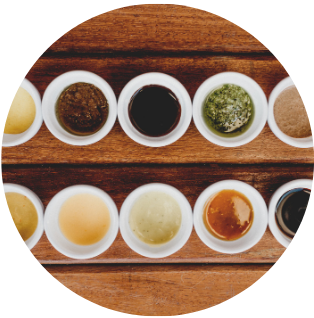
Rather than a family of matrix- or pathogen-specific kits, ClassiX™ DNA/RNA covers 14 validated sample types and every major organism class with one chemistry and one protocol.
Bacteria · Viruses · Fungi · Parasites
A "NEW" CLASSIC
Universality, defined on three axes
For ClassiX™ DNA/RNA, "universal" is a validated claim, not a descriptor, demonstrated across sample matrices, target organisms, and workflow format.
Sample Types
14
Every matrix
From stool, whole blood, and serum to swabs in all principal transport media.
One chemistry validated across 14 matrices with distinct cellularity and inhibitor profiles.
Organism Classes
6
Every target
Gram-positive and Gram-negative bacteria, RNA and DNA viruses, fungi, and blood-borne parasites, recovered without matrix- or pathogen-specific method changes.
Workflow Formats
2
Every scale
THE PROTOCOL
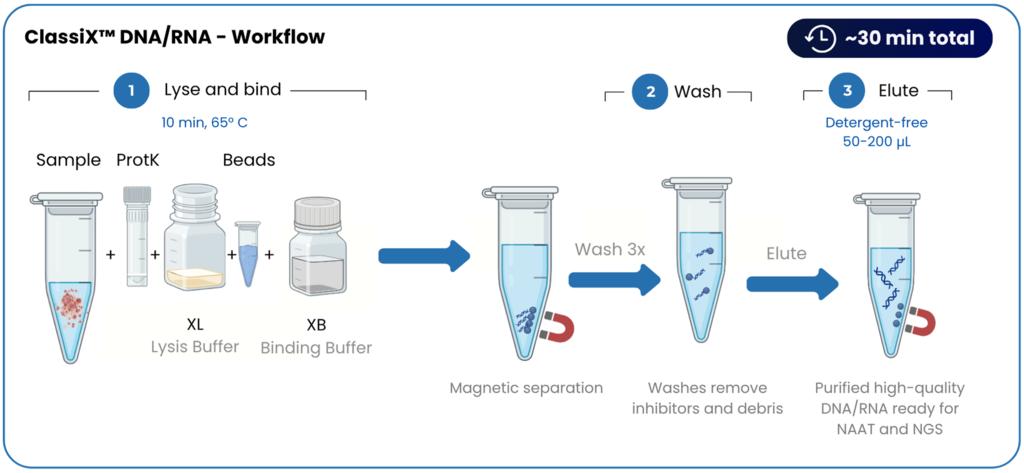
Sample to PCR- & NGS-ready in ~30 minutes
ClassiX™ DNA/RNA employs silica-bead capture chemistry, combining the binding efficiency of silica with the handling simplicity of magnetic separation. Pathogen inactivation is integral to the first step: Proteinase K and lysis buffer (XL) inactivate pathogens and quench nucleases as the sample is disrupted, protecting nucleic acid integrity from the outset.
DNA and RNA elute in a detergent-free buffer at flexible volume, ready for qPCR, dPCR, ddPCR, or NGS.
APPLICATIONS
Application areas
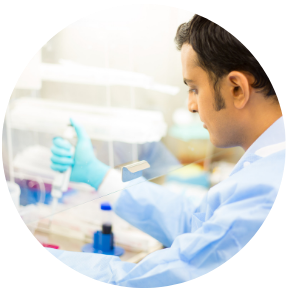
Clinical & molecular diagnostics R&D
Assay development and LDT-validation workflows requiring reproducible, documented extraction across multiple matrices.
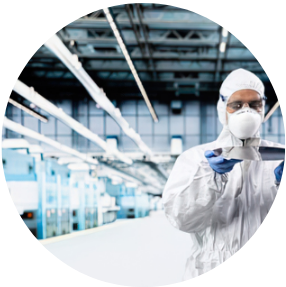
Biotech & pharma R&D
Biomarker research, NGS sample preparation, and target identification requiring co-extraction of DNA and RNA from a single input.
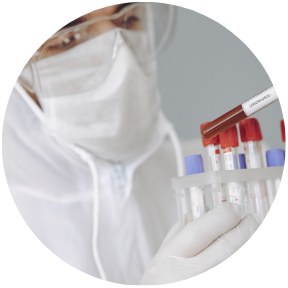
Infectious disease research
Processing of potentially infectious material, with pathogen inactivation at lysis and validated recovery across enteric, urogenital, and bloodborne matrices.
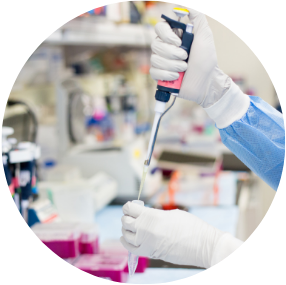
Laboratories working with several matrices
Laboratories processing heterogeneous sample types that require a single validated chemistry and protocol rather than matrix-specific methods.
UNIVERSAL COVERAGE
Validated across sample types and target organisms
Universality requires performance across both the sample matrix and the target organism. ClassiX™ DNA/RNA is validated across 14 sample matrices and the principal organism classes encountered in molecular diagnostics, from Gram-positive and Gram-negative bacteria to RNA and DNA viruses, fungi, and blood-borne parasites, enabling a single method to replace multiple matrix- or pathogen-specific kits.
14 validated sample types, across every specimen category
GASTROINTESTINAL
Stool
Rectal swab
BLOOD & SERUM
Whole blood
Serum
UROGENITAL
Urine
Vaginal swab
Semen
RESPIRATORY
Nasopharyngeal swab*
Throat swab
ENVIRONMENTAL
Wastewater
SWABS IN TRANSPORT MEDIA
Swabs in UTM/VTM
Swabs in saline / PBS
Swabs in Amies medium
Swabs in eNAT
Validated target organism classes
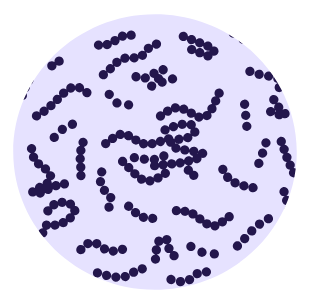
Gram-negative bacteria
E. coli O157 · EPEC · EAEC · Shigella · Campylobacter · Aeromonas · N. gonorrhoeae
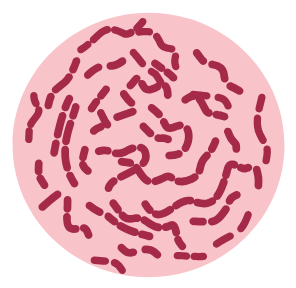
Gram-positive bacteria
Staphylococcus aureus
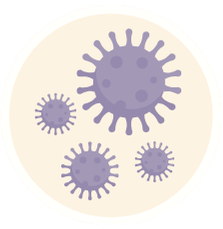
RNA & DNA viruses
SARS-CoV-2 · Dengue · TTV · human RNA targets
Fungi
Candida albicans
Parasites
Plasmodium falciparum
Mollicutes / atypicals
Mycoplasma genitalium · Ureaplasma urealyticum
All sample types listed are validated for use with ClassiX™ DNA/RNA. Target organism classes reflect species evaluated in internal and external validation studies; reference-kit identities are provided in the ClassiX™ DNA/RNA Application Note.
PERFORMANCE
Superior recovery from the most demanding matrices
Whole blood (heme, hemoglobin, high protein load) and stool (bile salts, polysaccharides, humic acids) are one the highest inhibitor burden matrices. Both were evaluated against commercial reference kits under matched conditions.
Whole blood
Genomic DNA and pathogen recovery from whole blood
✓ Human genomic DNA: ΔCq -2.6 vs. magnetic-bead reference; ΔCq +0.13 vs. spin-column reference (within ±1.5 Cq concordance).
✓ Porcine blood: 3 / 3 targets amplified (genomic, Gram-negative, Gram-positive); reference not detected.
✓ Serial dilution: Cq 36.9 at 1/1,000; reference not detected.
✓ P. falciparum, EDTA blood: ΔCq -2.1.
Mean Cq, 2–3 biological replicates per target. ΔCq = ClassiX Cq − reference Cq . Reference kits anonymized; identities in the Application note.
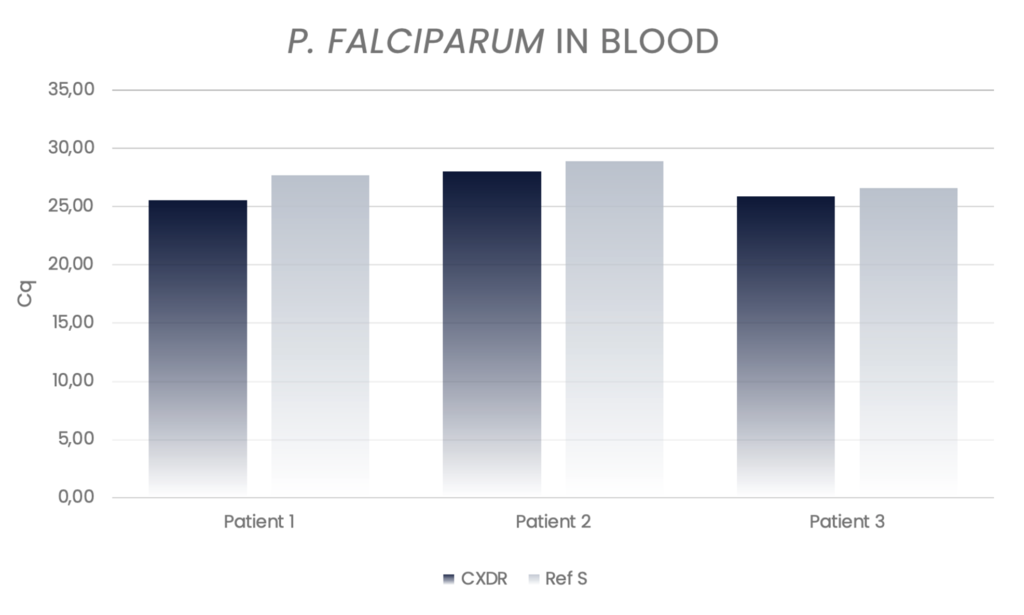
P. falciparum recovery from EDTA whole blood. Three patient samples extracted with ClassiX™ DNA/RNA (CXDR) and an anonymized commercial reference kit (Ref S); Biosynex Ampliquick Malaria assay. Lower Cq indicates earlier detection. ClassiX™ DNA/RNA gave earlier Cq in all 3 samples (mean ΔCq -1.23), with three-fold lower replicate variability (SD 0.07 vs 0.22). EDTA whole blood, 200 µL input, 100 µL elution.
Stool
Nucleic acid recovery from a high-inhibitor matrix
✓ 3 / 3 targets earlier than reference: CrAssphage ΔCq -1.5, E. coli -0.9, PMMoV -0.5.
✓ Inhibition panel: 0 / 32 events; internal control valid in all samples.
✓ External evaluation: E. coli O157 ΔCq -2.3; EAEC ΔCq -1.5.
✓ Automated vs. manual protocol: comparable Cq across all targets.
Mean Cq, 2–3 biological replicates per target. ΔCq = ClassiX Cq − reference Cq- Reference kits anonymized; identities in the Application note.

Enteric bacterial pathogen recovery from fecal swabs. Campylobacter spp., EPEC (enteropathogenic E. coli), EAEC (enteroaggregative E. coli), Shigella spp., Aeromonas spp. and E. coli O157 from three patient samples extracted with ClassiX™ DNA/RNA (CXDR) and an anonymized commercial reference kit (Ref S); AMPLIQUICK Fecal Bacteriology assay. Lower Cq indicates earlier detection. ClassiX™ DNA/RNA gave earlier Cq in 6 of 7 targets (mean ΔCq -0.72; up to -2.30 for E. coli O157), with valid internal controls throughout. Fecal swab, 200 µL input, 100 µL elution.
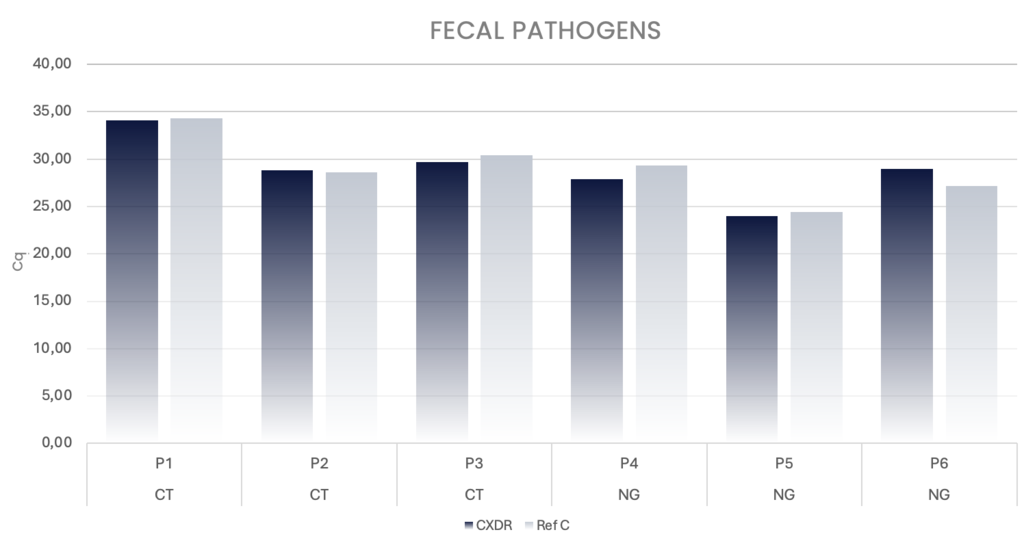
C. trachomatis (CT) and N. gonorrhoeae (NG) recovery from fecal swabs. Six patient samples and two positive controls (PC) extracted with ClassiX™ DNA/RNA (CXDR) and an anonymized commercial reference kit (Ref). Lower Cq indicates earlier detection. ClassiX™ DNA/RNA gave earlier Cq in 6 of 8 sample–target pairs (mean ΔCq -0.25 CT, -0.77 NG). Fecal swab, 200 µL input, 100 µL elution.
DOWNSTREAM COMPATIBILITY
Clean eluates, ready for every detection platform
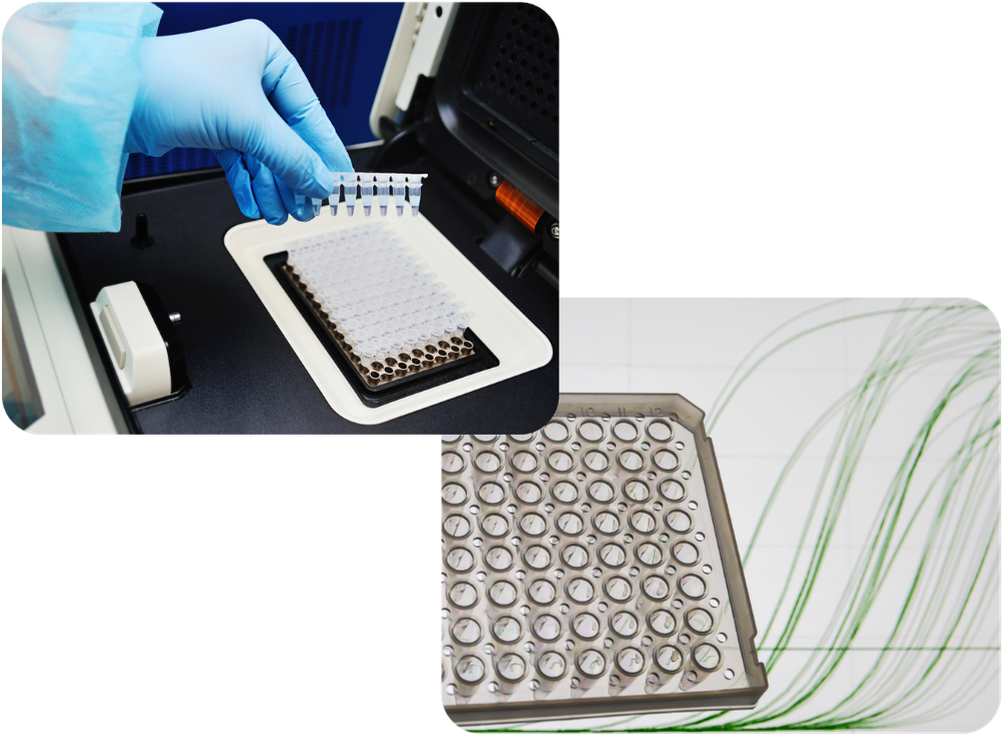
Guanidinium-salt wash and a detergent-free elution buffer produce eluates free of carry-over detergents and inhibitors. No additional cleanup, concentration, or nuclease treatment is required, the eluate can be used directly for your assay.
Elution volume is selectable from 50–200 µL to match downstream input requirements.
qPCR | Validated across in-house and commercial assays on standard real-time platforms, for both DNA and RNA targets from the same eluate. |
Multiplex PCR | Compatible with multi-target syndromic panels: evaluated with commercial STI, respiratory, and enteric panel assays. |
dPCR | Clean, low-inhibitor eluates suit partition-based absolute quantification, where carry-over inhibitors are especially disruptive. |
NGS library prep | Co-extracted DNA and RNA of suitable purity for sequencing workflows, including metagenomic and targeted panel library preparation. |
AUTOMATION
Fully automatable on the SwiftXtractor™ SL & more
The complete ClassiX™ DNA/RNA workflow runs end-to-end on the SwiftXtractor™ SL platform with the 15 mL/1.5 mL tube adapter. Load samples, press start, walk away: same chemistry, same protocol, automated.

Automated performance matches manual
In head-to-head testing, the automated protocol on SwiftXtractor™ SL matched or even improved manual extraction across matrices and yielded earlier Cq values on several urine targets (up to 3.3 Cq), automation without a performance trade-off.
Walk-away
Load samples, select the protocol, walk away; minimal operator variability.
Compact and Field-Deployable
SwiftXtractor™ SL weighs ~15 kg and runs on AC or DC power. Deploy at treatment plants, mobile labs, or field stations.
One vendor
Single support contract and validation pathway, simpler procurement.

ClassiX™ DNA/RNA can also be integrated on Starlet (Seegene / Hamilton), KingFisher (Thermo Scientific), GeneXplorer (Chroma) and Singuway devices.
Is your instrument not in the list? Ask us about instrument compatibility
Clinical Evaluation
Evaluated on authentic clinical specimens
Beyond spiked and contrived samples, ClassiX™ DNA/RNA has been evaluated on clinically sourced urine and urogenital specimens processed on the SwiftXtractor™ platform from a 200 µL input, with a 100 µL elution.
Sexually transmitted infection targets, including N. gonorrhoeae, C. trachomatis, and U. urealyticum, were recovered and detected by downstream qPCR using commercial STI assays. Detection outcomes varied with the specimen and the detection assay used, as is expected with clinically sourced material of unknown storage history.
Explore validation data
How to order
Prices and Accessories
CXDR-96
ClassiX™ DNA/RNA (RUO, 96 extractions)
✓ Magnetic-bead based DNA and RNA extraction
✓ Pathogen-safe lysis
✓ Manual or automated workflow
274 €
SXT
SwiftXtractor™ SL for automation of the ClassiX™ DNA/RNA extraction (More info)
✓ Standard consumable compatibility
✓ Pre-loaded validated protocols included
On request
MAGs
Magnetic separation racks (more info) for manual ClassiX™ DNA/RNA workflows.
✓ Efficient bead separation
✓ Optimized for ClassiX™ DNA/RNA runs
✓ Laboratory-grade build
Select yours
All prices without logistics costs.
Let's team up!
We invite research and clinical laboratories to co-validate ClassiX™ DNA/RNA on site-specific matrices and targets. Joint publications, pilot studies, and grant partnerships are welcome.
Explore opportunities

Resources
ClassiX DNA/RNA technical guides and resources


FAQ
Frequently Asked Questions
Practical answers on validated scope, workflow, and compatibility for ClassiX™ DNA/RNA.
Which sample types has ClassiX™ DNA/RNA been validated for?
ClassiX™ DNA/RNA is validated across 14 sample types: stool, urine, wastewater, vaginal swab, rectal swab, throat swab, nasopharyngeal swab, serum, semen, whole blood, and swabs in UTM/VTM, saline/PBS, eNAT, and Amies medium. A single chemistry and protocol applies across all of them, no matrix-specific method changes.
Does the kit extract both DNA and RNA?
Yes. ClassiX™ DNA/RNA co-extracts both DNA and RNA from a single input sample in one protocol. There is no need to split the sample or run a separate kit for each analyte, which preserves limited material and simplifies the workflow. The chemistry has been evaluated across bacterial, viral, fungal, and parasitic targets.
How long does the protocol take?
The complete workflow, lysis, capture, wash, and elution, runs in an approximately 30-minute time window. Lysis uses Proteinase K and lysis buffer (XL) at 65 °C, followed by silica-bead capture at room temperature, guanidinium-salt washes, and a detergent-free elution.
What downstream detection methods are compatible?
Eluates are directly compatible with qPCR, RT-qPCR, digital PCR (dPCR), droplet digital PCR (ddPCR), and NGS. The detergent-free elution buffer introduces no PCR-inhibiting detergents, so no additional cleanup or concentration step is required before amplification.
What equipment is needed for the manual workflow?
The manual workflow uses a magnetic separation rack (MAG-12) and a heating block or water bath for the lysis step. Because capture is magnetic, no centrifuge, vacuum manifold, or spin columns are required at any point in the workflow.
Can the workflow be automated?
Yes. The identical chemistry runs both manually and as a validated automated protocol on Xpedite's SwiftXtractor™ SL, and is compatible with widely used automation systems. In direct comparison, the automated protocol matched manual extraction across matrices, with earlier Cq on several urine targets. Scaling to automation requires no change of chemistry or re-validation.
Does the kit remove PCR inhibitors?
Yes. Guanidinium-salt wash buffers and a detergent-free elution buffer are designed to clear the inhibitors characteristic of complex matrices, bile salts, polysaccharides, and humic acids in stool, and heme and hemoglobin in blood. On a 32-sample negative fecal panel, ClassiX™ DNA/RNA recorded 0 / 32 inhibition events, with valid internal control in every sample.
How should the kit and reagents be stored?
ClassiX™ DNA/RNA reagents are stored at room temperature, 15–25 °C. No cold chain is required for storage or transport, which simplifies shipping, on-site storage, and decentralized deployment.
What elution volume does the kit use?
Elution volume is flexible from 50 to 200 µL, allowing the eluate to be matched to downstream assay requirements, a smaller volume to concentrate low-abundance targets, or a larger volume where more eluate is needed across multiple reactions.
Is the kit suitable for demanding or low-abundance samples?
Yes. ClassiX™ DNA/RNA was designed for the matrices that most often compromise extraction. In validation, it recovered amplifiable target from whole blood including a quantifiable signal at a 1/1,000 blood dilution and delivered early Cq values on low-biomass matrices such as urine. For specific or emerging applications, contact our technical team.
One kit for all. ClassiX™ DNA/RNA.
Available for pre-order with immediate dispatch. Request the complete validation dataset, or contact our technical team to discuss your specific sample types and automation platforms.